Waste to wealth: a different approach for data centres?
20th July 2026
Along with the announcement about the two potential data centres that has generated so much media attention was an announcement about restarting the steel plant in Point Lisas and the production of vanadium. This has received a lot less attention, but I am very intrigued by the project. To be totally honest, I know very little about vanadium (and I doubt I am alone in that) but I have been doing a bit of reading up about the metal over the past few days.
Vanadium is a mineral with vital strategic uses, including in military hardware and oilfield equipment, especially as an alloy to strengthen steel. It is also used in batteries, central for the development of renewable energy systems.
The major existing producing countries for vanadium are Russia, China and South Africa. The United States government has identified vanadium as a critical mineral and is developing policies to secure supply chains. One of the possible sources for vanadium is waste piles or stores from existing industry, especially refinery waste, steel slag heaps and spent catalysts, where the vanadium was present in the ores or crude oils or other raw materials prior to refining or smelting. From what I have read, newer technologies can recover vanadium from these waste stores or tips, rather than mining the original deposits.
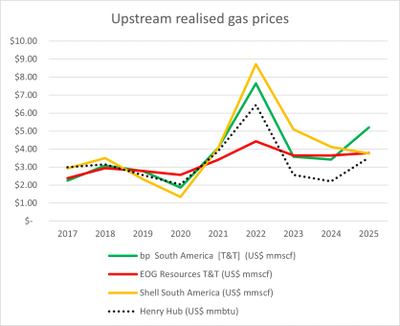
My assumption is that Trinidad could be a good potential source of recovered vanadium from the old steel plant slag dumps and from refinery or crude residues in the bottom of tanks across the island. As this is a critical mineral and given our geopolitical alignment with the USA, there may be US financing or even grants available to help recover this critical mineral. This could be an excellent boost to help the economics of restarting the steel works, which I am sure are challenging in the current Trinidad gas pricing environment.
This also got me thinking about the data centre proposals.

Google Earth image of steel plant, Point Lisas, Trinidad.
Gas to gigabytes: at what price?
14th July 2026
Just last week I wrote an article on the link between water and electricity in Barbados and the challenge of avoiding siloed planning. Little did I know that much of the non-football online conversation in Trinidad & Tobago over the following days would be dominated by the very issues of water and electricity, though in this case related to proposals for the construction of two largescale datacentres announced by the Trinidad & Tobago Prime Minister, Kamla Persad Bissessar on Friday 10th July.
There was also an announcement about restarting the steel plant in Point Lisas and the production of vanadium, a strategically important metal.
A lot of the online chat has concentrated on concerns over water availability and the ability of the electricity grid to supply the two proposed data centres. This discussion has been sparked because of the plethora of content from people opposing new data centres and their impact on the environment, noise pollution, water availability and the electricity grid, especially in the United States (where the majority of data centres are being built).
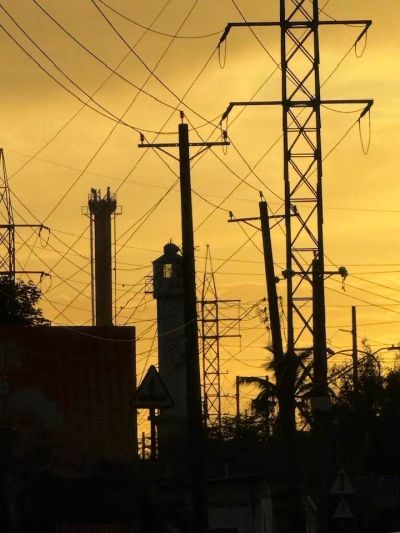
Can water and electricity mix?
9th July 2026
The Barbados Water Authority (BWA) is the biggest single consumer of electricity on the island of Barbados. The island’s flat topography, high population density and reliance on ground water means that pipe born water is pumped to most consumers (using electrical pumps), with little or no help from gravity. Plans to ramp up desalination to meet demand in this water scarce country will only increase the energy requirements of the water sector. Storm damage to the electrical grid can result in serious challenges to water delivery, as electric pumps go offline when the grid fails.
This is a stark reminder of the strong links between energy, water and climate change in the Caribbean and clearly highlights the need for policy decisions that transcend the traditional silos that often characterise decision making.

Methanex indefinitely suspends operations in T&T
29th June 2026
The news that Methanex have decided to close their Titan methanol plant in Point Lisas should not come as a surprise.
The company clearly signalled this risk earlier this year, when they advised their shareholders that there was a risk that they would not be “able to secure additional natural gas on commercially acceptable terms … to enable us to operate at capacity or at all”. Nevertheless, when the actual news breaks of another major multinational company ceasing petrochemical production, the risk on paper suddenly becomes real, especially for the hundreds of employees and thousands of contractor workers who now face an uncertain future.
Coming on the top of the closure of the Nutrien ammonia plants seven months ago, this is a major blow to Trinidad’s petrochemical industry. Methanex’s bigger Atlas methanol plant has been mothballed since September 2024, and it is now joined by Titan. Nutrien is looking for a buyer for its Trinidad assets.
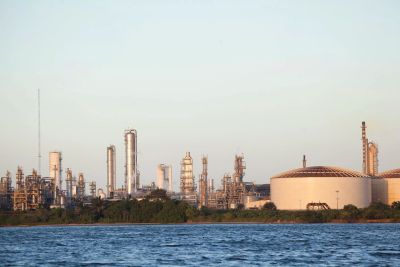
Importing gas, exporting services?
19th June 2026
Can Trinidad & Tobago become a hub for offshore Venezuela oil and gas developments?
The news that Shell has signed a non-associated gas license with the Government of Venezuela to develop the Loran field in the Plataforma Deltana region is significant for the energy sector in Trinidad & Tobago.
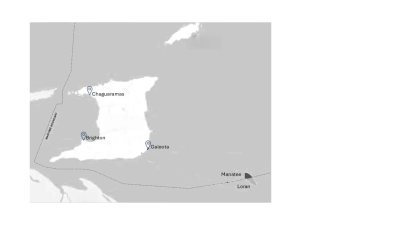
Much of the discussion has been about the fact that natural gas produced from the Loran field will be exported across the maritime boundary to the Manatee field infrastructure already under construction and then will flow to the Atlantic LNG facility in Point Fortin for sale into international markets. From the news made public so far, it is not clear if any of the gas will be contracted to the domestic petrochemical plants in Trinidad, though even if all of the Loran gas is earmarked for LNG that might free up other domestic gas for petrochemicals. Under phase one of the project one hundred percent of the gas produced at Loran will be exported to Trinidad, with this first phase covering the first 1.7 trillion cubic feet (tcf) out of a total reserve base of around 7.3 tcf.
While the Trinidad discussion has focused on the gas imports, it would also be good to hear some discussion about how the Loran field will be developed and the opportunities that this might create for Trinidad to act as a logistical hub to service the field, during both the development phase and ongoing operations. In other words, service exports to Venezuela.
A boost for marginal marine gas fields in T&T
10th June 2026
Most of the commentary on the Finance Bill currently being debated in Trinidad & Tobago’s Parliament has concentrated on the increase in fines, fees and penalties contained in the legislation. There are, however, two measures in the Bill that have a much greater significance as far as I am concerned, namely the reduction in the royalty rate for marginal offshore gas fields and the increase in capital allowances for investments into these fields.
It is well known that over time most of the bigger and more prolific shallow water gas fields in Trinidad & Tobago have already been brought into production. Newer gas fields are often smaller and more complex, meaning that their cost per unit of production is higher and the economics are more challenging. This has meant that while the downstream industry has been starved of gas, there have been small, stranded gas fields remaining undeveloped, simply because the maths does not make sense to bring them into production.
The new legislation applies to gas fields with probable reserves less than 300 billion cubic feet (bcf) and whose calculated rate of return is less than 15%.

Dragon gas: the soap opera continues
21st May 2026
In my final CEO’s column in the Energy Chamber’s Energy Now newspaper, published in January 2026, I likened the on-again, off-again story of the Dragon gas field to a daytime soap opera. Every time it seemed like the plot was moving in one direction, there would be a sudden twist, and everything would change once again.
The latest Dragon plot twist took place in the Trinidad & Tobago Parliament on Wednesday 13th May 2026, and I must admit it took me completely by surprise. The Minister of Finance, Dave Tancoo, announced that the government was setting up a new committee to examine how it was going to tax natural gas being imported from Venezuela and processed in Trinidad.
For many years now, I have been pointing out to anyone who would listen that while imported Venezuelan gas was important to keep our petrochemical and LNG industries in operation, it would not produce the government revenue that domestic gas provides. The biggest tax take in the gas value chain is at the wellhead, in the form of royalties, petroleum profit taxes or profit shares under production sharing contracts. This is the major source of revenue for the government of Trinidad & Tobago from our gas resources. With Venezuelan gas these taxes would of course be collected by the Venezuelan government: the gas resources being produced in Venezuela belong to the people of Venezuela, just like Trinidad & Tobago’s resources belong to the people of Trinidad & Tobago.

Trinidad’s downstream industry and high gas purchase prices
8th May 2026
The news that Nutrien are actively looking to sell their Trinidad assets and that Proman are making significant new investments in the UAE has refocused attention on the future of the downstream petrochemical industry in Trinidad & Tobago.
The policy discussion around the gas industry in Trinidad & Tobago has largely been centred on gas production. This is not surprising given the fact that the biggest issue facing the gas industry in the country for well over a decade is the shortage of gas supply from the upstream producers to the downstream plants in Point Lisas and La Brea and the LNG export facility in Point Fortin. While the policy discussion has focussed on how to increase gas production, the crucial issue of price also needs to be a central concern. Gas must not just be available; it has to be available at a price that allows the downstream plants to be profitable.
The Trinidad petrochemical industry was originally developed when companies offshored production from the USA to Trinidad to take advantage of competitive gas prices. The reality now is that companies can access cheaper gas in the US than in Trinidad. This is a serious threat to the future of Trinidad’s petrochemical industry.
Upstream up and downstream down
28th April 2026
The news from Trinidad & Tobago’s energy sector seems to have been almost bipolar in recent months. On the one hand there has been very encouraging news on the progress with the Manatee, Ginger and Coconut projects and the promise of new gas coming on stream in 2027/2028, significant progress with Venezuelan gas, Exxon moving fast with their deepwater exploration, NGC’s reported increase in profits plus high prices on the back of the Iran War. On the other hand, there is the news of a crisis in Point Lisas, plant closures, job losses, and 56% of contractors reporting a decline in business activity in the first quarter of 2026.
In the social media comment sections, the response to this bipolar picture has been predictably political, with people accusing anyone reporting the good news as being pro-government and anyone reporting the bad news as being pro-opposition. The reality is that both sides of the story are correct. In the most basic terms, there is a positive story in the upstream sector and a negative story in the downstream sector.

Will Jamaica have the option of leaving their oil in the ground?
22nd April 2026
Highly respected Jamaican economist, Dr Damien King, has caused quite a stir in Jamaica and around the Caribbean in recent days by arguing that if Jamaica finds oil the best policy response would be to leave it in the ground. King’s argument is that the historical evidence indicates that resource rich economies typically perform worse than resource poor economies, who have to rely on their own innovation and creativity rather than living off the fat of the land (the resource curse hypothesis).
The context for this is the recently reported positive results from a seabed piston core survey at forty-two selected locations in the United Oil and Gas operated Walton Morant block, off the south coast of Jamaica. The survey involves taking samples of seabed sediments and conducting a chemical analysis of the collected sediments to determine the presence of hydrocarbons. The results of the recently concluded survey indicated the presence of butane and pentane molecules, which is a strong indicator of an active petroleum system.
While I can appreciate both the excitement that this news has generated in Jamaica, as well as the caution expressed by King, there is a very long road to still travel before Jamaica has to worry about the resource curse from oil production. There is a big difference between positive piston survey results and declaring a commercial discovery of an oil and gas field.

Fiction and the “full man”
11th April 2026
Many years ago, I took part in a panel discussion at the Lok Jack Graduate School of Business on leadership in the energy sector. One of the questions was about work-life balance and what each of the leaders on the panel did in their leisure time. There was the usual talk about family and exercise, but one of the things I mentioned is that I like to read good novels. A journalist who was present at the event subsequently wrote a story about the panel and he mentioned the fact of my novel reading in a final sentence of the article, in a tone that suggested he was a bit bemused by this admission.
I was reminded of this last week listening to a fascinating panel on workforce development at CERA Week. One of the panellists was Reginald DesRoches, President of Rice University in Houston; a university who has an excellent reputation for producing graduates sought after by industry. He explained that their very strong industry linkages mean that they were able to ensure that their undergraduates received cutting edge teaching in the various domains of their studies, be it chemical engineering or petroleum geology. He explained, however, that because technology was moving so fast what they were teaching today would often be out of date even in a few years’ time. It was therefore important that they also taught critical thinking, and that this, in his view, came from ensuring that all undergraduates got a strong grounding in the liberal arts.

Does Calypso have a future in T&T?
7th April 2026
Just to be clear upfront, I am writing about the big gas resources in the deep waters between Tobago and Barbados, rather than the musical genre. The future of calypso music is a whole other subject, on which I have no competency to opine.
The Calypso gas resource comprises several gas discoveries in Block 23(a) and Block TTDAA 14, around 100 km to the east of Tobago (towards the maritime boundary with Barbados). Block TTDAA 14 was originally licensed to BHP in 2011, with Block 23 (a) being licensed to bp and Repsol the same year. BHP’s petroleum division was subsequently sold to fellow Australian company, Woodside, leaving BHP to concentrate on its global minerals operations and Woodside to integrate the oil and gas business into their existing operations.

T&T's role in US energy security
29th March 2026
Trinidad & Tobago plays a small, often overlooked, but nevertheless crucial, role in the energy security of the United States. At critical and stressful times for the US energy system, including winter cold snaps and summer heat waves, liquified natural gas from the Atlantic facility in Trinidad is needed to keep people in New England either warm or cool. During these times, LNG cargoes from Trinidad are imported into the Everett LNG facility in Boston to supplement the gas supplied to the northeast of the USA by pipelines.
Speaking at CERA Week, the US Secretary of Energy, Chris Wright, gave a definition of energy security that emphasised the ability of the nation to provide the energy needed by all citizens at all times, even when the energy system was under strain due to extreme weather conditions. On a net basis and as the world’s biggest oil producer and biggest exporter of LNG, the United States clearly provides more total energy than it consumes. However, there are bottlenecks in the US energy system which mean that at high demand times particular geographical areas may face shortfalls from domestic sources. This is when Trinidad steps in.

Offshore gas at the forefront of Venezuela investments
28th March 2026
While the crisis in the Middle East was obviously at the top of everyone’s mind at CERA Week, Venezuela was also a major focus. Opposition leader, María Corina Machado’s speech received top billing. She laid out an ambitious reform programme for the hydrocarbon sector, with a strong focus on creating the environment to encourage private sector investment, as well as proposing the privatisation of PDVSA.
When it came to Venezuela, however, I was listening even more closely to Wael Sawan, the CEO of Shell. He spoke positively about Shell’s potential investments in Venezuela and most significantly mentioned that they were trying to advance not just one but two final investment decisions by the end of this year. One of these two will, I am sure, be the fabled Dragon gas field, which has received so much media attention over the years. The second is less clear.
The need for speed: can T&T learn from Guyana’s success?
25th March 2026
Accelerating the pace of delivery has been a major theme at this year’s CERA Week.
In a panel on developing the Atlantic margin, the Senior Vice President at Exxon in charge of deepwater developments, Hunter Farris gave the case of Trinidad & Tobago as a good recent example of moving fast through the early approval process. He reported how Exxon had signed a production sharing contract for the ultra-deepwater block TTUD1 in August 2025, received environmental approvals for their seismic campaign in December 2025, began to collect seismic data in January 2026 and were already beginning early processing of the data.